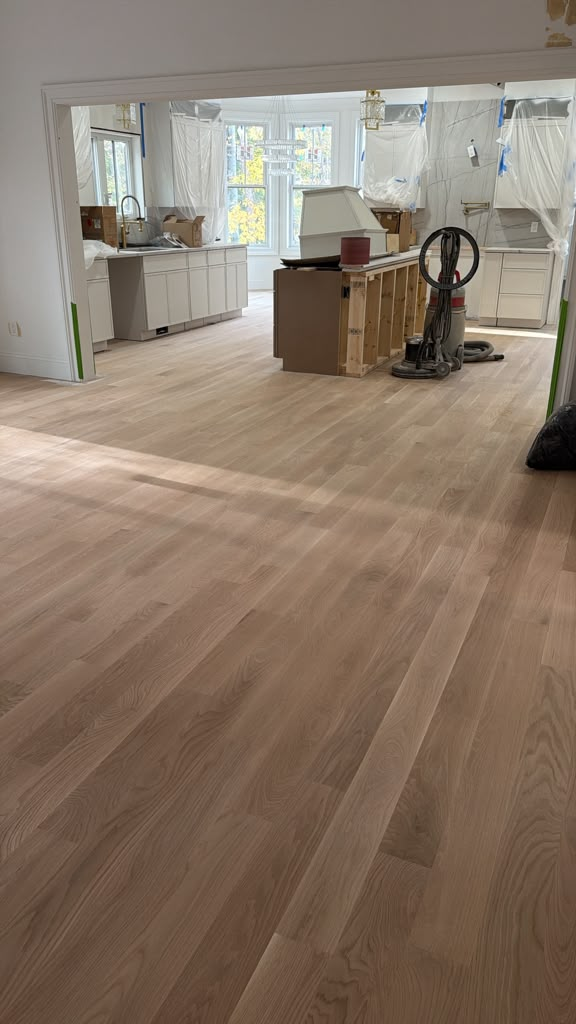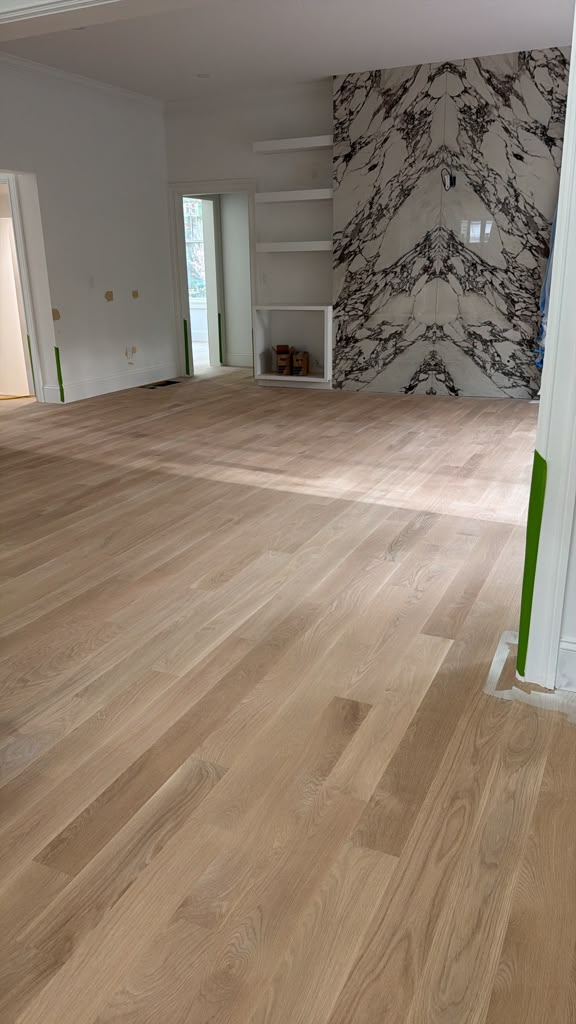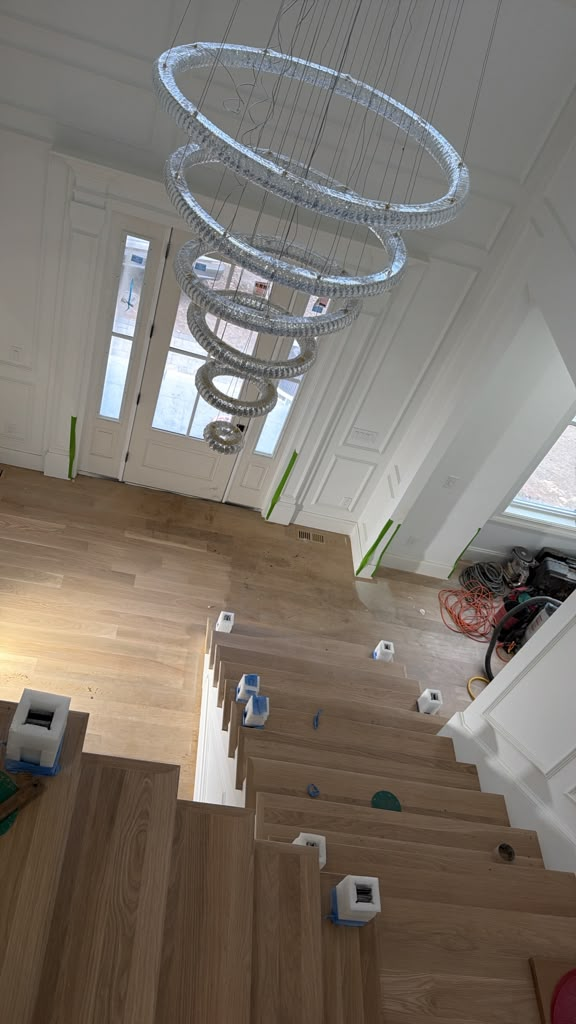

Stairs see concentrated daily use, and their flooring choices involve details that flat rooms do not. Treads, risers and nosing each have their own wear patterns, and the material used on an adjoining room's floor is not always available or suitable in a stair-tread format. LS Floor Works installs hardwood and vinyl stair treads and nosing for Greater Boston homes. Share photos of the staircase, including the top and bottom landings, when requesting an estimate.
Hardwood and vinyl options for stairs
Hardwood stair treads and nosing are available in profiles designed for the edge and depth of a step, and matching them to an adjoining hardwood floor depends on the specific product and its availability. Vinyl stair components, including treads and nosing designed for click or SPC-style flooring, follow the manufacturer's own stair installation instructions, which can differ from how the material is installed on a flat floor. Not every flat-floor product has a corresponding stair-nosing profile, so confirming availability early avoids surprises later in the process.
Some households also want to coordinate a runner or other separate accessory with the new treads, and that decision affects how the nosing edge is finished and how much of the tread surface remains exposed, so it is worth deciding before installation begins.
Safety, wear and everyday use in a stairway
Stair edges see more concentrated wear than open floor area, and nosing profiles exist in part to address that edge. Lighting, handrail position and the condition of the existing stair structure are all relevant to planning the work, and an uneven or damaged stringer should be identified before new treads are installed over it. Households with children, pets or frequent deliveries may want to discuss traction and visibility of the nosing edge as part of material selection, understanding that specific slip-resistance claims depend on the chosen product's own documentation.
Measuring an existing staircase accurately can be harder than it looks, since riser heights and tread depths are not always consistent in older homes. A site visit allows those measurements to be taken directly rather than relied upon from a rough estimate.
Planning a stair flooring project
Provide the number of steps, approximate width and photos of the current stairs, risers and any adjoining flooring when requesting an estimate. A site visit allows the existing structure, tread condition and nosing requirements to be assessed directly, since stairs vary more than flat floors from one home to another. Material availability should be confirmed for the specific hardwood or vinyl product you want, particularly if matching an existing floor. Installation follows the fastening and clearance requirements for the chosen tread and nosing system. A walkthrough at completion is a chance to check each step, the nosing edges and any handrail clearance.
Where a staircase connects two different flooring types, such as a hardwood upper floor and a vinyl lower floor, the transition at the top or bottom step deserves its own discussion, since the tread and nosing material chosen can affect how that connection looks and functions.
What affects a stair estimate
The number of steps, stair width, tread and nosing profile and the condition of the existing stairway all factor into an estimate. Winders, landings and open versus closed stringers can add complexity compared with a straight run. Matching an adjoining hardwood or vinyl floor may require confirming product availability before pricing is finalized. Ask what preparation of the existing stairs is included. LS Floor Works serves Boston, Cambridge, Somerville, Quincy, Newton and Waltham. Call or text (857) 346-7934 to discuss your stairs in English or Portuguese.
Because stairs are used throughout the day by everyone in the household, scheduling the work to minimize disruption, such as completing sections in a logical order, is worth raising ahead of time, particularly in a home with only one staircase connecting floors.
Caring for your finished floor
Keep treads clean and dry, with no loose objects on the steps. Use cleaners approved for the finish and avoid slippery polish. Inspect nosing regularly for movement or damage and report concerns promptly so a secure finish is maintained.