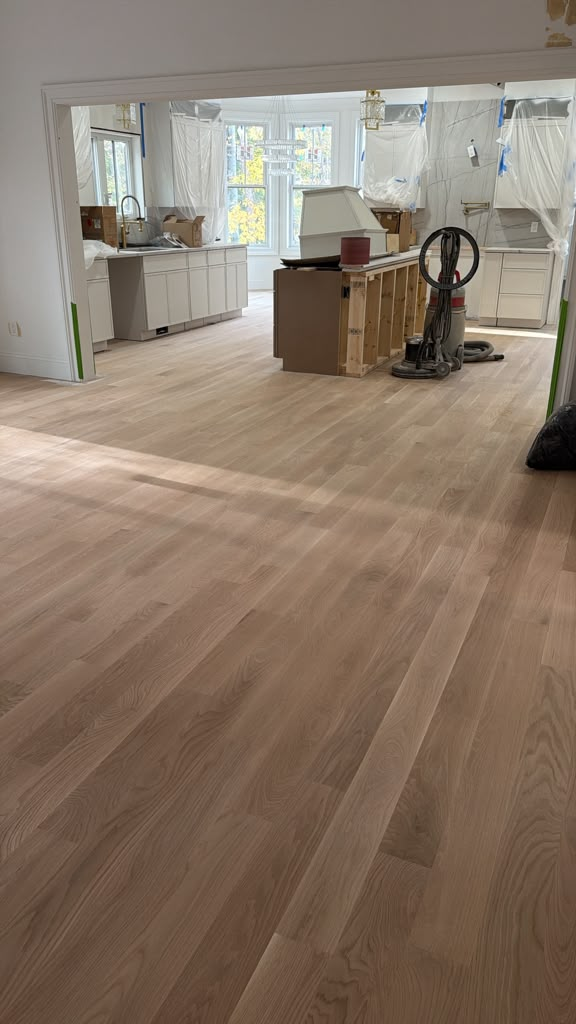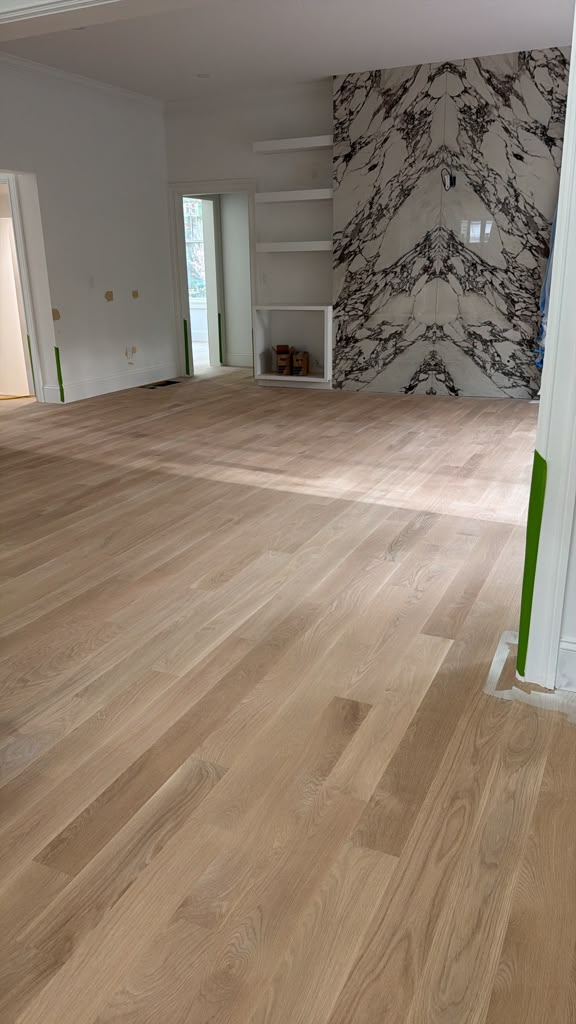

Hardwood brings warmth and a natural look that many Boston homeowners want in living rooms, bedrooms and hallways. Choosing hardwood is not only a matter of color; board width, finish and the condition of the room underneath all shape the outcome. LS Floor Works installs hardwood flooring for Greater Boston homes. Share your room measurements, photos and preferred look so a realistic scope and estimate can be put together around your specific space.
What to consider before choosing hardwood
Hardwood products vary by species, board width, plank length and factory finish. Appearance alone does not tell you how a floor will perform in a given room, and the manufacturer's instructions govern acceptable installation methods, acclimation and site conditions. Wood responds to humidity and temperature, so a room with inconsistent conditions needs that addressed before installation rather than after. Ask about the manufacturer's stated limitations for the product you are considering, including any guidance on moisture exposure, before assuming it suits every room in your home.
Many homeowners also ask about underlayment and sound, especially in multi-unit buildings or homes with a finished space below. The subfloor material, whether plywood or concrete, affects which fastening or adhesive methods are appropriate, and that should be confirmed before board selection is finalized rather than assumed from the product's marketing alone.
Rooms where hardwood is commonly used
Living rooms, bedrooms, dining rooms and hallways are typical locations for hardwood in a Boston home. Direct sun exposure, radiant heat sources and nearby entries that track in moisture are all worth discussing before installation, since they can affect how a floor settles and ages. Hardwood is not recommended for persistently wet or below-grade conditions, and a site review can help clarify whether a particular room is appropriate. Bring samples into the actual room and view them in your lighting, since appearance can shift noticeably between a showroom and your home.
It also helps to think about how the hardwood will meet adjoining rooms, thresholds and existing floors. A consistent transition plan avoids an uneven step between rooms and keeps the overall layout looking intentional rather than improvised during installation.
From estimate to finished floor
Start by describing your rooms, approximate square footage and timeline through an estimate request, including photos of the existing floor and any transitions. A site visit allows the subfloor, humidity conditions and layout to be assessed before work begins. Preparation may be needed where the base is uneven or otherwise unsuitable, and that should be identified as part of the plan rather than discovered mid-project. Installation follows the board direction, expansion requirements and fastening method appropriate to the chosen product. A final walkthrough is a chance to review the finished surface, transitions and care instructions before furniture returns.
Delivery timing for the chosen hardwood product can affect the schedule, since some options are kept in stock while others are special-order items. Confirming lead time early, alongside the acclimation period the product may require, helps set realistic expectations for when installation can begin and finish.
What affects a hardwood estimate
Total area is one factor among several. Board specification, layout complexity, the number of transitions, stairs or adjoining rooms, and subfloor preparation can all change the scope. Access to the home and the condition found during a site review also play a role. Ask what is included in a quoted estimate rather than comparing a square-foot number alone. LS Floor Works serves Boston, Cambridge, Somerville, Quincy, Newton and Waltham. Call or text (857) 346-7934 to discuss your rooms; communication is available in English and Portuguese.
Homeowners sometimes want to compare multiple board widths or finishes side by side before committing. Viewing larger samples in the actual room, rather than relying on a small chip, gives a more accurate sense of how the floor will read once it covers the full space.
Caring for your finished floor
Sweep grit regularly and use finish-approved cleaners. Felt pads under furniture help protect the surface. Keep indoor humidity consistent and wipe spills promptly; avoid soaking wood or using steam unless the product manufacturer expressly permits it.